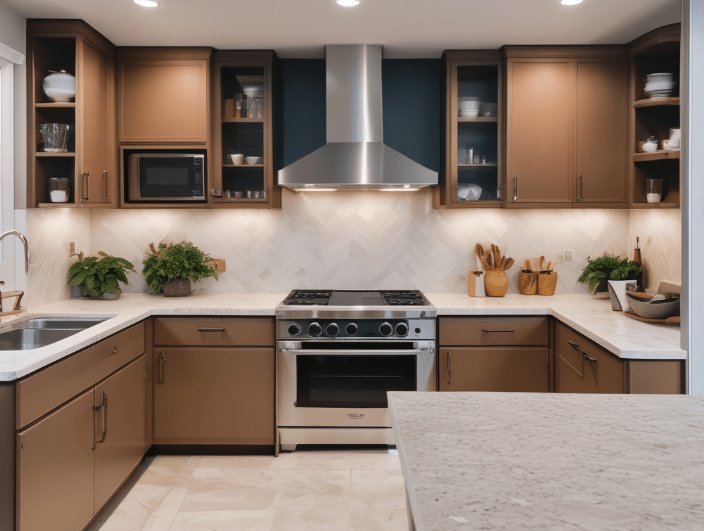
Re-modelling an existing kitchen can greatly enhance its functionality, aesthetic appeal, and value.
Here’s a step-by-step guide to help you through the process:
1. Planning and Budgeting
- Assess Needs and Goals: Identify what you want to achieve with the remodel. Consider layout changes, additional storage, improved functionality, and aesthetic updates.
- Set a Budget: Determine how much you are willing to spend. Allocate funds for different aspects of the remodel such as cabinets, countertops, appliances, labor, and unexpected expenses.
- Timeline: Establish a realistic timeline for the project. Consider factors like order times for materials and availability of contractors.
2. Design and Layout
- Hire a Professional: Consider hiring a kitchen designer or architect to create an efficient and aesthetically pleasing design.
- Layout Options: Evaluate different kitchen layouts (L-shape, U-shape, galley, island) based on your space and needs.
- Workflow and Ergonomics: Plan the kitchen layout to optimise the workflow, often referred to as the kitchen work triangle (sink, stove, refrigerator).
3. Select Materials and Finishes
- Cabinets: Choose between custom, semi-custom, and stock cabinets. Consider materials, finishes, and hardware.
- Countertops: Select durable materials like granite, quartz, or laminate that suit your style and budget.
- Flooring: Choose flooring that is durable and easy to clean, such as tile, hardwood, or vinyl.
- Backsplash: Pick a backsplash material that complements the countertops and cabinets, such as ceramic tile, glass, or stone.
4. Appliances and Fixtures
- Update Appliances: Choose energy-efficient appliances that fit your needs and design. Consider built-in options for a seamless look.
- Plumbing Fixtures: Select a new sink and faucet that match your kitchen style. Consider functionality, such as a pull-out sprayer or touch-less faucet.
- Lighting: Plan for a combination of task lighting, ambient lighting, and accent lighting. Under-cabinet lights, pendant lights, and recessed lights are popular choices.
5. Demolition and Preparation
- Clear the Space: Remove existing cabinets, countertops, appliances, and fixtures. Prepare for dust and debris.
- Structural Changes: If making significant layout changes, hire professionals to handle structural modifications such as removing walls or relocating plumbing and electrical systems.
6. Installation
- Cabinetry: Install new cabinets according to the design plan. Ensure they are level and properly secured.
- Countertops: Once cabinets are in place, measure for countertops and have them fabricated and installed.
- Flooring: Install new flooring, ensuring it is level and properly sealed.
- Backsplash: Install the backsplash after the countertops, ensuring it is aligned and sealed properly.
7. Finishing Touches
- Paint and Trim: Paint walls and install trim or moulding for a finished look.
- Install Appliances: Place and connect new appliances, ensuring they are properly installed and functional.
- Lighting and Fixtures: Install light fixtures, faucets, and any additional hardware or accessories.
8. Final Inspections and Clean-Up
- Inspections: Ensure all electrical, plumbing, and structural work complies with local building codes. Schedule necessary inspections.
- Clean-Up: Thoroughly clean the remodelled kitchen to remove dust and debris.
- Final Touches: Add decorative elements like rugs, curtains, and accessories to complete the look.
Summary
Re-modelling a kitchen involves careful planning, selection of materials and finishes, and execution of structural and aesthetic changes.
Hiring professionals for design and major installations can ensure a successful remodel that meets your needs and enhances your home’s value.
Enjoy your new, updated kitchen!
Discover more from Move or Improve
Subscribe to get the latest posts sent to your email.
 Move or Improve
Leave a comment