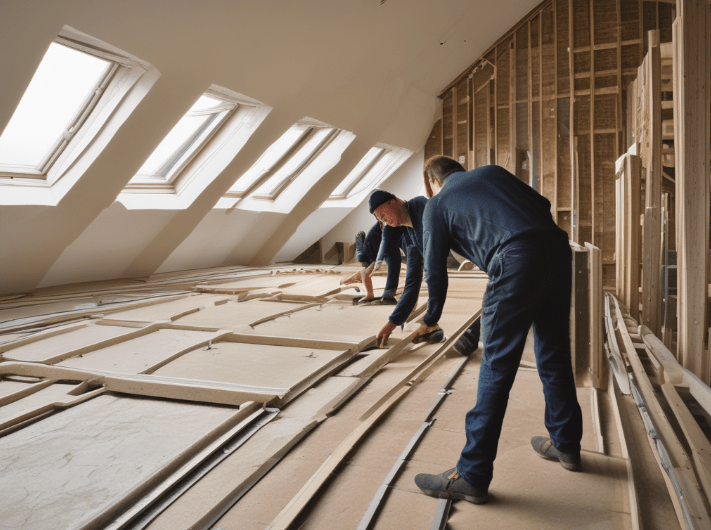
Undertaking a DIY loft conversion can be a rewarding project that adds significant value and space to your home. However, it involves careful planning, adherence to building regulations, and a clear understanding of the tasks involved.
Here’s a comprehensive guide to help you through the process:
1. Initial Planning
Assess Suitability
Head Height: Measure from the floor to the highest point in the loft. A minimum of 2.2 meters is generally required.
Roof Structure: Determine if you have a trussed roof or a traditional cut roof.
The former might be more challenging for a DIY conversion.
Access: Plan where the staircase will go. Ensure there is sufficient space without compromising other rooms.
Define Purpose
Decide on the function of the loft space (e.g., bedroom, office, playroom).
Plan the layout, considering the placement of windows, plumbing, and electrics.
2. Budgeting
Cost Estimation
Basic Conversion: £15,000 – £20,000
Intermediate Conversion: £25,000 – £40,000 (includes dormer windows, enhanced insulation)
High-End Conversion: £40,000 – £60,000+ (en-suite bathrooms, bespoke finishes)
Break Down Costs:
- Structural changes (floor reinforcement, dormers)
- Insulation and soundproofing
- Windows and ventilation
- Electrical and plumbing work
- Fixtures and fittings
- Permits and inspections
3. Design and Planning Permission
Architectural Plans
Create detailed drawings. Consider hiring an architect or using architectural software.
Ensure the design complies with building regulations regarding fire safety, insulation, and structural integrity.
Planning Permission
Check if you need planning permission. Simple conversions often fall under permitted development rights, but larger changes like dormers may require approval.
Check our recent blog post on Permitted Development for further information.
Submit plans to the local planning authority if needed.
4. Building Regulations
Compliance
Structural Integrity: Reinforce the floor to support additional weight.
Insulation: Meet thermal regulations to ensure energy efficiency.
Fire Safety: Install fire-resistant doors, smoke alarms, and possibly a sprinkler system. Ensure there are safe escape routes.
Staircase: Design stairs that meet building regulations for width, height, and headroom.
5. Preparation and Demolition
Clear the Loft
Remove old insulation, debris, and any existing structures.
Check for any structural issues, like damp or rot, that need addressing before construction.
Initial Modifications
Reinforce the floor joists.
Install steel beams if required by your design.
6. Construction Phase
Floor Installation
Lay a new floor with appropriate insulation and soundproofing materials.
Walls and Insulation
Build stud walls according to your design.
Insulate walls, roof, and floor to comply with building regulations.
Windows and Ventilation
Install windows (e.g., Velux windows or dormers) to provide natural light and ventilation.
Ensure proper ventilation to prevent condensation and dampness.
Electrical and Plumbing Work
Plan the placement of electrical outlets, lighting, and plumbing fixtures.
Run wiring and pipes, ensuring they meet safety standards.
Staircase Installation
Construct and install the staircase, ensuring it meets all regulatory requirements.
7. Finishing Touches
Plastering and Painting
Plaster walls and ceilings for a smooth finish.
Paint or wallpaper as desired.
Flooring and Carpeting
Install flooring materials, such as carpet, hardwood, or laminate.
Fixtures and Fittings
Fit light fixtures, electrical outlets, and plumbing fixtures.
8. Final Inspections and Certification
Building Control Inspection
Arrange for the local authority’s building control officer to inspect the work at various stages.
Ensure all work complies with regulations and obtain the necessary certifications.
9. Furnishing and Decoration
Move in furniture and decorate the space to suit its new purpose.
Consider storage solutions to maximise the usability of the loft.
Resources
- Planning Portal: www.planningportal.co.uk
- Homebuilding & Renovating: http://www.homebuilding.co.uk
- VELUX Windows: http://www.velux.co.uk
By following this detailed guide, you can undertake a DIY loft conversion that is cost-effective and compliant with building regulations, resulting in a functional and attractive new space in your home.
Discover more from Move or Improve
Subscribe to get the latest posts sent to your email.
 Move or Improve
Leave a comment