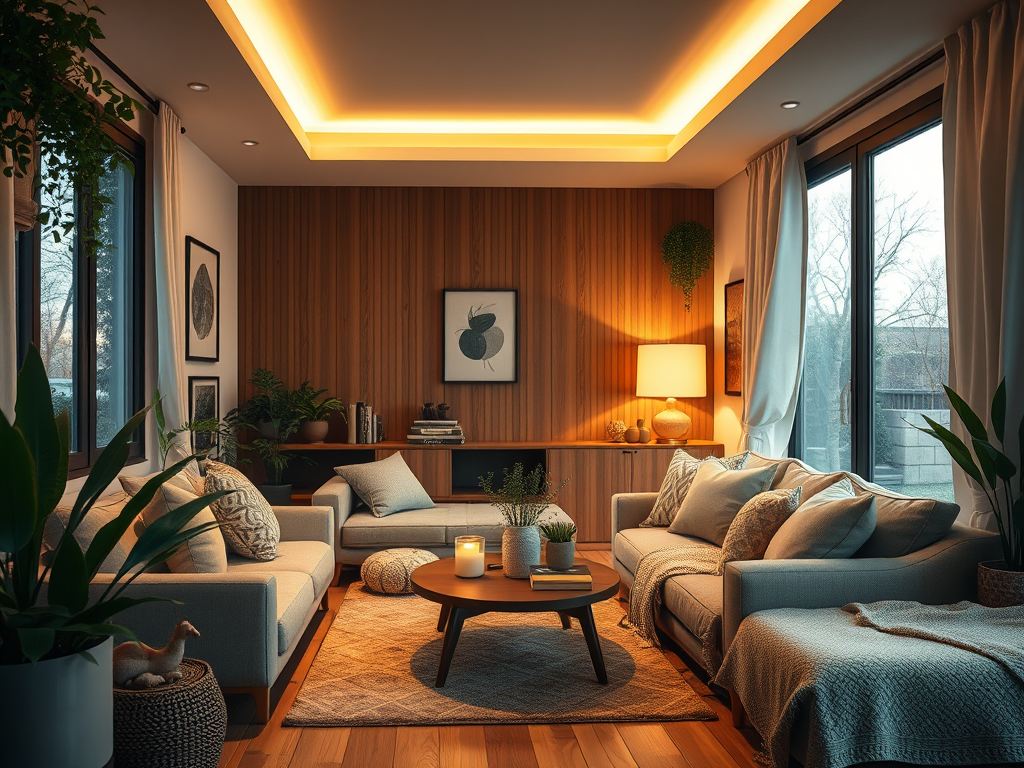
Lighting is one of the most powerful tools you can use to transform your home into a cozy, inviting retreat. Whether you’re looking to create a warm atmosphere in your living room, a serene ambiance in your bedroom, or a bright and functional kitchen space, the right lighting can make all the difference. In this post, we’ll explore how to use lighting to enhance your UK home, offering both DIY options and tips on when to call in the professionals.
The Power of Layered Lighting
Layered lighting is the key to creating a versatile and comfortable space. It involves combining different types of lighting—ambient, task, and accent, to achieve a balanced and inviting environment.
1. Ambient Lighting: The Foundation
Ambient lighting is the general, overall illumination of a room. It’s your starting point, providing a comfortable level of brightness without glare. Common options include ceiling-mounted fixtures, recessed lights, and wall-mounted sconces.
DIY Option: Installing dimmable LED bulbs in your existing ceiling fixtures is an easy way to control the mood of a room. Many smart bulbs available today can be installed without an electrician and can be controlled via an app, allowing you to adjust the light to match the time of day or your activity.
When to Call a Pro: If you’re looking to install recessed lighting or wire new ceiling fixtures, it’s best to hire a qualified electrician. These jobs require electrical work that must comply with UK safety standards, and you may need to obtain Building Regulations approval, particularly if you’re altering or adding circuits.
2. Task Lighting: Functionality with Style
Task lighting focuses on specific areas where activities such as reading, cooking, or working take place. This type of lighting is crucial for functionality while also adding style to your home.
DIY Option: Table lamps, floor lamps, and under-cabinet lighting strips are great for DIY installation. They’re plug-and-play, meaning you can easily move them around as needed without any electrical work.
When to Call a Pro: For hardwired task lighting, such as installing new under-cabinet lights or pendant lights over a kitchen island, professional installation is advised. An electrician can ensure that your lighting is safely installed and properly integrated with your existing electrical system.
3. Accent Lighting: Highlighting Your Space
Accent lighting is used to highlight architectural features, artwork, or other focal points in a room. It adds depth and dimension, making your space feel more dynamic and visually interesting.
DIY Option: Battery-operated LED spotlights or plug-in picture lights are excellent DIY options for accent lighting. They’re easy to install and can be moved around without hassle.
When to Call a Pro: If you’re looking to install built-in accent lighting, such as recessed wall lights or spotlights in shelving units, a professional electrician should handle the installation. This ensures that all wiring is hidden and safely connected.
Creating the Perfect Atmosphere
The atmosphere in your home is heavily influenced by the colour and temperature of your lighting. Warm, soft lighting (around 2700K) creates a cozy, intimate feel, while cooler, brighter lighting (3000K–4000K) is better for task-oriented spaces like kitchens and home offices.
1. Living Room: Cozy and Inviting
In the living room, opt for warm, dimmable lights to create a cozy ambiance. Use a mix of ambient lighting from ceiling fixtures, task lighting from floor or table lamps, and accent lighting to highlight artwork or architectural features.
DIY Tip: Replace standard bulbs with smart bulbs that can be adjusted to different colors and intensities, giving you the flexibility to change the mood depending on the occasion.
2. Bedroom: Tranquil and Serene
For a serene bedroom, choose soft, warm lighting. Bedside lamps with adjustable brightness are ideal for reading or winding down before sleep.
DIY Tip: Consider adding a dimmer switch to your bedroom’s main light fixture. This is a relatively simple project for a DIY enthusiast, but if you’re unsure, consult an electrician.
3. Kitchen: Bright and Functional
Kitchens need a combination of bright ambient lighting and focused task lighting. Use under-cabinet lights for countertops and bright overhead lights for general illumination.
DIY Tip: Installing plug-in LED strip lights under your cabinets can be a quick and easy way to enhance your kitchen’s functionality.
When to Call a Pro: For any hardwired fixtures or new lighting circuits, it’s crucial to hire an electrician. They can ensure that everything is installed to meet UK electrical safety standards.
Don’t Forget the Outdoors
Outdoor lighting is just as important as indoor lighting when it comes to creating a welcoming and safe environment.
1. Pathway Lighting
Illuminate walkways with solar-powered stake lights or plug-in garden lights. These are easy to install yourself and can significantly enhance your garden’s appearance and safety.
2. Security Lighting
Motion-sensor lights near entrances and along the perimeter of your home can deter intruders and provide safety when arriving home at night.
When to Call a Pro: Installing hardwired outdoor lights, especially those connected to your home’s electrical system, should be done by a professional to ensure proper installation and weatherproofing.
Final Thoughts
Whether you’re looking to create a cozy retreat or a functional workspace, the right lighting can completely transform your home. With a mix of DIY solutions and professional installations, you can achieve the perfect ambiance while ensuring that everything is safe and up to code. Remember, when in doubt about electrical work, it’s always best to consult with a certified UK electrician to avoid any risks.
Ready to start illuminating your space?
Explore your options, plan your lighting layers, and enjoy the transformation as your home becomes the cozy retreat you’ve always dreamed of.
Discover more from Move or Improve
Subscribe to get the latest posts sent to your email.
 Move or Improve
Leave a comment