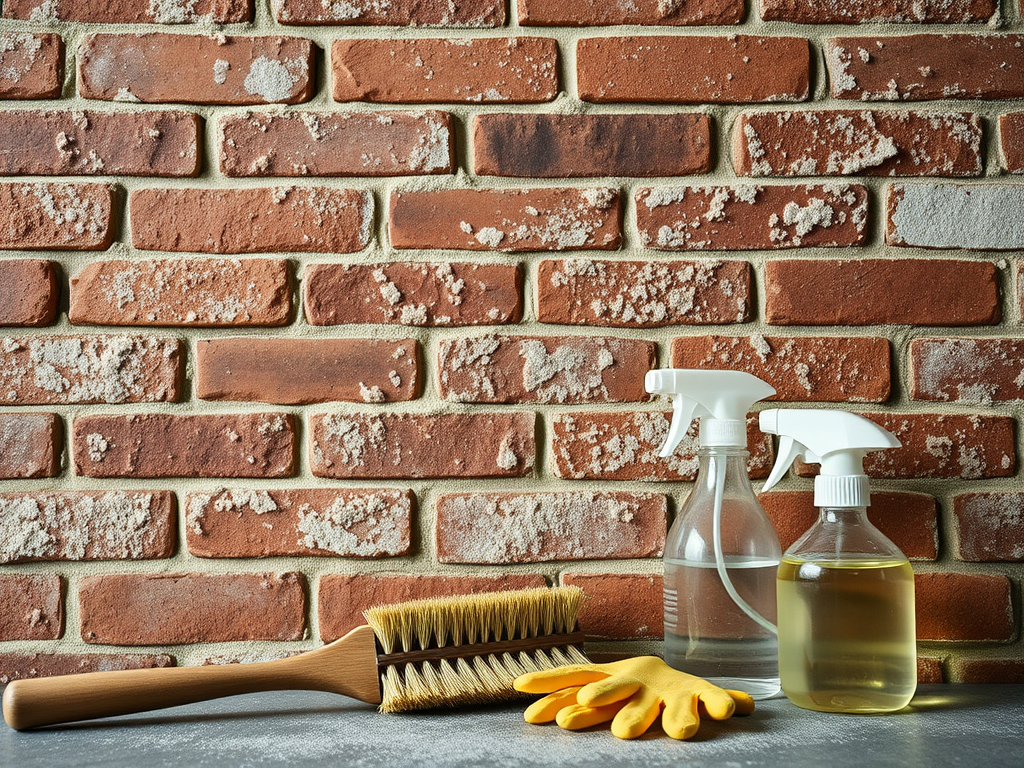
Efflorescence, often seen as white salt marks on bricks, can be a common issue in masonry. It occurs when water evaporates from the bricks, leaving behind salt deposits.
Here’s a step-by-step guide to removing these marks:
Materials Needed
- Stiff-bristled brush (non-metallic)
- Vacuum cleaner (optional)
- White vinegar
- Bucket
- Water
- Spray bottle
- Rubber gloves
- Safety goggles
- Scrub brush
- Garden hose or a bucket of clean water
- Protective clothing
Steps to Remove Efflorescence
Dry Brushing
Brush off loose salt deposits: Use a dry, stiff-bristled brush to scrub the surface and remove as much efflorescence as possible. Be gentle to avoid damaging the brick. You can use a vacuum cleaner to collect the loosened salt deposits and prevent them from resettling on the brick.
Prepare Vinegar Solution
Mix solution: Combine one part white vinegar with one part water in a bucket. Vinegar is mildly acidic and effective at dissolving salts.
Transfer to spray bottle: Pour the mixture into a spray bottle for easier application.
Apply Vinegar Solution
Protect yourself: Wear rubber gloves, safety goggles, and protective clothing to avoid any irritation from the vinegar.
Spray the solution: Generously spray the vinegar solution onto the affected bricks, ensuring that the salt marks are well-saturated.
Scrub the Bricks
Use a scrub brush: After letting the vinegar solution sit for a few minutes to dissolve the salts, scrub the bricks with a stiff-bristled brush to remove the remaining efflorescence.
Rinse Thoroughly
Rinse with clean water: Use a garden hose or a bucket of clean water to rinse the bricks thoroughly. This helps to wash away any remaining vinegar solution and dissolved salts.
Dry the Area
Allow bricks to dry: Let the bricks air dry completely. Ensure good ventilation to aid in drying.
Repeat if Necessary
Assess the bricks: If efflorescence remains, you may need to repeat the process. Persistent efflorescence may require several treatments.
Preventive Measures
Seal the Bricks
Apply a breathable masonry sealer to prevent water from entering the bricks while allowing moisture to escape. This helps to minimise future efflorescence.
Improve Drainage
Ensure proper drainage around the brickwork to prevent water from pooling and penetrating the bricks. Check gutters, downspouts, and the grading around your building.
Use Proper Materials
Use low-alkali mortar and bricks to reduce the salts available for efflorescence. Consult with a masonry expert for the best materials to use in your region.
Maintain Ventilation
Ensure good ventilation in areas with brickwork to promote faster drying and reduce moisture accumulation.
By following these steps, you can effectively remove efflorescence and take preventive measures to keep your bricks looking clean and well-maintained.
Discover more from Move or Improve
Subscribe to get the latest posts sent to your email.
 Move or Improve
Leave a comment