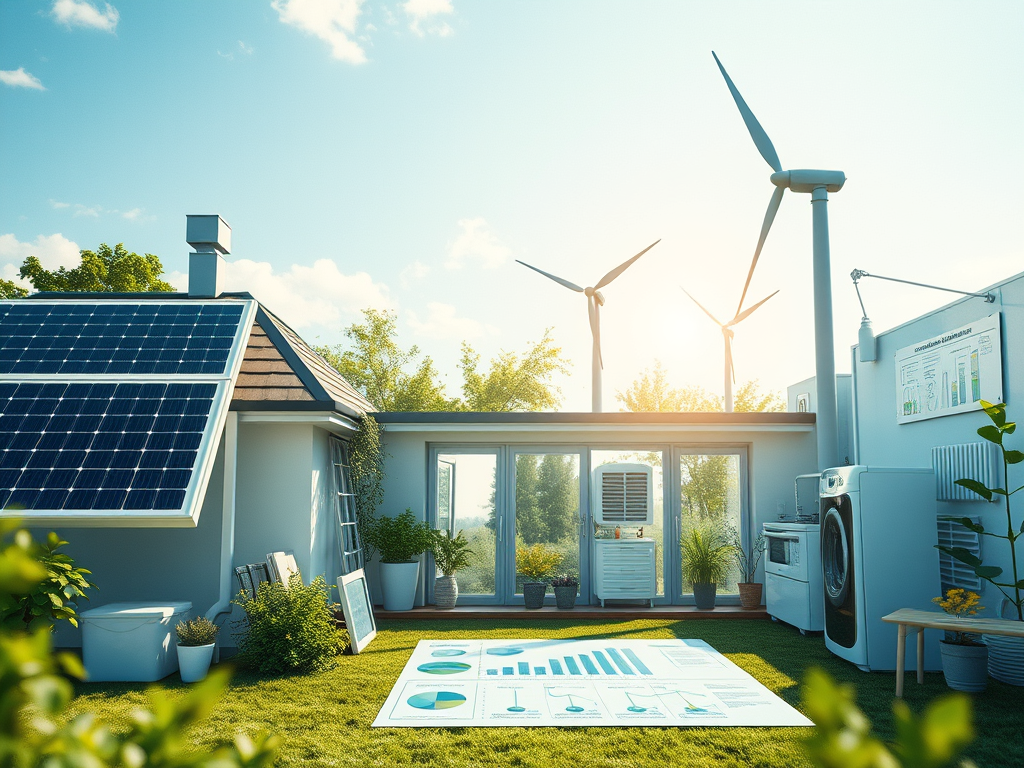
With energy costs rising and the climate crisis escalating, many UK homeowners are turning to renewable energy as a solution to reduce bills and their carbon footprint. This guide will explain how you can transition to renewable energy sources like solar panels, wind turbines, and heat pumps, and how to make it work for homes with limited space. We’ll also break down costs and practical tips to help you get started.
Why Switch to Renewable Energy?
Renewable energy offers several benefits:
• Lower Bills: While initial costs can be high, renewables reduce long-term energy costs.
• Environmental Impact: Reduces carbon emissions and supports the UK’s net- zero goals.
• Energy Independence: Protects you from fluctuations in energy prices.
• Government Incentives: Schemes like the Smart Export Guarantee (SEG) allow you to earn money by selling surplus energy back to the grid.
Step 1: Start Small
1. Install Solar Panels
• How it Works: Solar panels convert sunlight into electricity. Even in cloudy UK weather, they can provide significant energy savings.
• Start Small: A 3kW system is ideal for beginners, producing enough electricity for small households.
• Cost:
• Installation: £5,000–£7,000.
• Maintenance: ~£100/year.
• Savings: Reduces electricity bills by up to 50%.
2. Heat Pumps
• Air Source Heat Pumps: Extract heat from outside air for heating and hot water. Ideal for moderate UK winters.
• Ground Source Heat Pumps: More efficient but require space for underground pipes.
• Cost:
• Air Source: £7,000–£13,000.
• Ground Source: £20,000–£35,000.
• Savings: Can reduce heating bills by up to 60%.
• Government Support: The Boiler Upgrade Scheme (BUS) offers grants of up to £5,000 for air source and £6,000 for ground source heat pumps.
3. Combine with the Grid
• Start by supplementing your mains supply with renewable energy. For example, solar panels can power daytime appliances while the grid handles night-time usage.
Step 2: Expand Over Time
1. Add More Solar Panels
• For complete energy independence, expand to a 10kW system.
• Cost: £15,000–£25,000.
• Savings: Can eliminate electricity bills entirely.
2. Install Battery Storage
• Store excess solar energy to use during the evening or cloudy days. Popular options include the Tesla Powerwall.
• Cost: £8,000–£12,000 per battery.
• Savings: Increases self-sufficiency by 80–90%.
3. Explore Wind Turbines
• Small Turbines: Suitable if you have at least an acre of land and a windy location.
• Cost:
• Installation: £9,000–£30,000.
• Savings: Generates up to £1,200/year in energy.
Step 3: Solutions for Small Homes
If space is limited, here are some alternatives:
1. Community Energy Projects
• Join a local solar or wind farm and receive a share of the energy produced.
• Cost: Varies but often cheaper than installing your own system.
2. Portable Solar Panels
• Small, foldable panels are ideal for charging devices or powering small appliances.
• Cost: £200–£1,000.
3. Micro Heat Pumps
• Compact systems that fit smaller homes.
• Cost: £2,000–£6,000.
4. Energy Efficiency Upgrades
• Reduce your overall energy use by improving insulation, switching to LED lighting, and using energy-efficient appliances.
• Cost: £1,000–£5,000.
Understanding Costs and ROI
| Renewable Energy System | Initial Cost | Annual Running Cost | Annual Savings | Payback Period |
| Solar Panels (3kW) | £5,000–£7,000 | ~£100 | £300–£500 | 10–15 years |
| Battery Storage | £8,000–£12,000 | Minimal | £200–£400 | 15–20 years |
| Air Source Heat Pump | £7,000–£13,000 | £150–£200 | £300–£600 | 10–15 years |
| Ground Source Heat Pump | £20,000–£35,000 | £200–£300 | £500–£1,000 | 20–25 years |
| Wind Turbine (Small Scale) | £9,000–£30,000 | £200–£500 | £800–£1,200 | 15–20 years |
Key Considerations
1. Government Incentives: Check schemes like the SEG and the Boiler Upgrade Scheme to reduce costs.
2. Energy Monitoring: Use smart meters to track usage and optimise your renewable system.
3. Professional Assessment: Consult experts to determine the best renewable options for your home.
4. Planning Permission: Solar panels usually don’t require planning permission, but wind turbines might.
Final Thoughts
Switching to renewable energy in the UK is a practical and rewarding choice. By starting small and expanding over time, you can make a significant impact on your bills and the environment. With government support and innovative technology, there’s never been a better time to embrace renewables for your home.
Discover more from Move or Improve
Subscribe to get the latest posts sent to your email.
 Move or Improve
Leave a comment