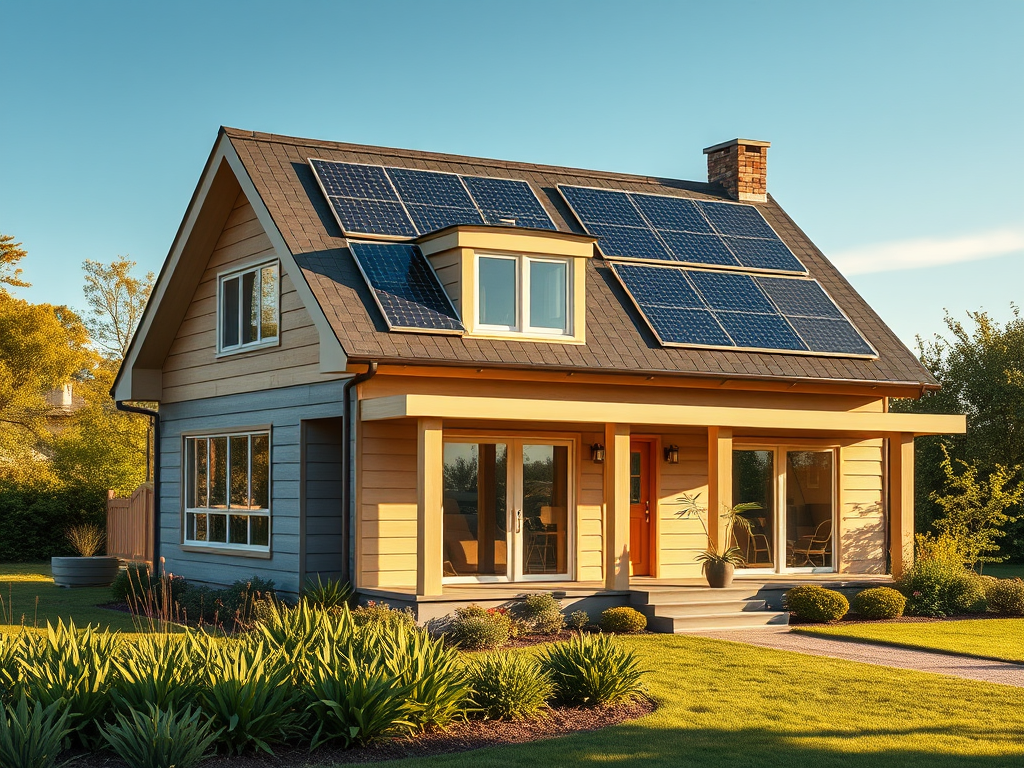
With energy prices remaining unpredictable and homeowners prioritising sustainability, the dream of a “house with no bills” has moved from eco-experiment to mainstream ambition across the United Kingdom.
While it’s difficult to eliminate every outgoing completely, thousands of UK households are now running homes where electricity, heating and hot water costs are close to zero; thanks to smart retrofits, renewable energy systems and airtight insulation.
Here’s how it works, what upgrades matter most, and how much it typically costs to get there.
What Does a “House With No Bills” Actually Mean?
In practical terms, this usually refers to a home that:
- Produces most (or all) of its own electricity.
- Uses ultra-efficient heating.
- Has excellent insulation and airtightness.
- Stores surplus power in batteries.
- Minimises reliance on gas.
- Sometimes exports energy back to the grid.
These homes are often rated EPC A and are sometimes described as net-zero-energy homes.
Step 1: Generate Your Own Electricity With Solar
Solar photovoltaic (PV) panels are the backbone of most low-bill homes.
Typical UK costs (2026):
- 3–4kW system: £5,000–£7,500.
- 6–8kW system: £8,000–£12,000.
What you save:
- £600–£1,000+ per year on electricity.
- Income from exporting excess energy.
Tip: South-facing roofs with little shading perform best, but east/west layouts can still work extremely well.
Step 2: Replace Gas With a Heat Pump
Air-source heat pumps extract warmth from outside air and deliver efficient space heating and hot water.
Typical costs:
- Installed price: £9,000–£14,000.
- Government grants can reduce this significantly.
Why they matter:
- 3–4× more efficient than gas boilers.
- Essential for low-carbon homes.
- Perfect partner for solar generation.
Step 3: Super-Insulate the Building
Before installing renewables, reduce how much energy the house needs.
Common upgrades & costs:
- Loft insulation: £300–£1,500.
- Cavity wall insulation: £700–£2,500.
- External wall insulation: £8,000–£20,000.
- Triple glazing: £6,000–£15,000+.
Impact:
Well-insulated homes may use 50–70% less heat energy than standard properties.
Step 4: Add Battery Storage
Home batteries store surplus solar electricity for evening use.
Typical costs:
- 5–10kWh system: £3,500–£8,000.
Benefits:
- Dramatically increases solar self-use.
- Reduces grid dependence.
- Allows time-of-use tariff optimisation.
Step 5: Smart Controls & Ventilation
Low-energy homes rely on intelligent systems:
- Smart thermostats.
- Zoned heating.
- Mechanical ventilation with heat recovery (MVHR).
- Energy-monitoring apps.
Costs:
- Smart controls: £200–£1,000.
- MVHR systems: £3,000–£7,000 (mostly for major renovations).
How Much Does It Cost to Create a Near-Zero-Bill Home?
Typical retrofit budgets:
| Upgrade Package | Estimated Cost |
| Solar only | £5k–£12k |
| Solar + battery | £9k–£20k |
| Heat pump + insulation | £12k–£30k |
| Full low-energy retrofit | £20k–£60k+ |
New-build homes designed from scratch can achieve ultra-low running costs for 10–15% extra build cost compared with conventional construction.
How Long Is the Payback?
Most households see:
- 8–15 years for full payback.
- Faster returns when energy prices rise.
- Immediate EPC improvement.
- Higher resale values.
Properties with strong energy ratings increasingly command price premiums and sell faster.
Can Any Home Become a “No-Bills” House?
Almost all homes can dramatically reduce running costs but success depends on:
✔ Roof orientation
✔ Plot size
✔ Construction type
✔ Budget
✔ Planning constraints
✔ Local grid capacity
Victorian terraces, bungalows and 1960s semis can all be transformed but listed buildings and flats may face extra restrictions.
Key Takeaways
- ☀ Solar is usually the starting point.
- ♨ Heat pumps replace gas.
- 🧱 Insulation is essential.
- 🔋 Batteries maximise savings.
- 📉 Near-zero bills are achievable.
- 💷 £20k–£60k is common for deep retrofits.
- 🏡 Energy-efficient homes are worth more.
Final Thought
A “house with no bills” is no longer futuristic, it’s increasingly practical, financially sensible and attractive to future buyers.
Whether you’re upgrading before moving, renovating for retirement, or future-proofing an investment property, energy efficiency is rapidly becoming one of the most powerful ways to protect household finances in the years ahead.
If you’d like guidance on whether your home could achieve ultra-low running costs and which upgrades would deliver the best return, Move or Improve can help you plan your next step with confidence.
If you’d like help deciding whether to move or renovate your home, email enquiries@moveorimprove.uk
Discover more from Move or Improve
Subscribe to get the latest posts sent to your email.
 Move or Improve
Leave a comment