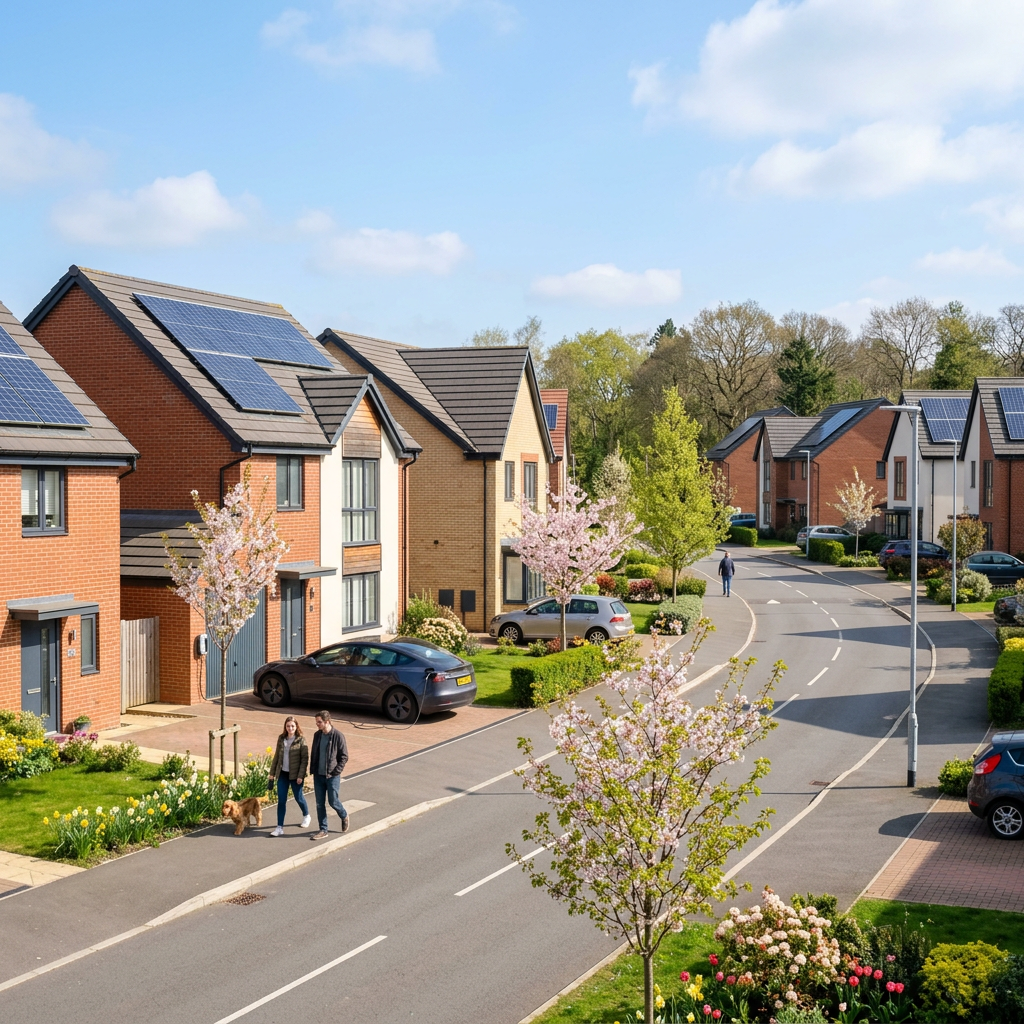
As we move deeper into spring, the UK housing market is entering one of its traditionally busiest periods, but the mood in May 2026 is notably more measured than in previous years.
Buyers remain active, sellers are returning to the market in greater numbers, and mortgage rates seem to be stabilising. Yet affordability pressures, energy-efficiency concerns and high transaction costs continue to shape behaviour in profound ways.
For readers of Move or Improve, this is increasingly becoming a market where the smartest decision is not always obvious. In many cases, homeowners are finding that the question is no longer simply:
“Can we move?” but rather:
“Does moving still make more sense than improving?”
Essential Insights for Buyers & Investors
The May market is defined by selective confidence.
Demand remains healthy for well-located, energy-efficient homes with flexible layouts, but buyers are increasingly cautious about properties requiring major upgrades.
At the same time, many homeowners are delaying relocation altogether due to the combined impact of:
- Stamp duty.
- Mortgage affordability.
- Limited housing supply.
- Renovation potential in existing homes.
This continues to strengthen the “improve rather than move” trend across much of the UK.
UK Market Snapshot
The overall market picture in May 2026 is relatively stable:
- House prices are broadly holding, with modest regional growth in stronger markets.
- Family homes in desirable commuter and suburban locations remain in short supply.
- Listings are increasing slightly compared with earlier in the year.
- Buyers are taking longer to commit and negotiating more carefully.
Importantly, the market is increasingly split between:
- High-performing, energy-efficient homes, and
- Older, inefficient properties requiring investment.
That gap appears to be widening.
Key Trends Shaping the UK Housing Market
Energy Efficiency Is Affecting Value More Than Ever
EPC ratings are now materially influencing buyer behaviour.
Properties with:
- Heat pumps.
- Solar panels.
- Modern glazing.
- Strong insulation, are attracting stronger demand and often commanding pricing resilience.
Meanwhile, homes requiring major retrofit work are facing more scrutiny.
Renovation Remains a Major Alternative to Moving
High transaction costs continue to discourage frequent moving.
For many households, redirecting stamp duty and moving expenses into:
- Extensions.
- Loft conversions.
- Layout reconfiguration.
- Whole-house retrofits, is proving financially attractive.
Flexible Living Still Matters
Hybrid working patterns remain firmly embedded.
Buyers continue prioritising:
- Home offices.
- Garden studios.
- Quiet rooms.
- Adaptable layouts.
- Wellness-focused spaces.
This is shaping both renovation projects and purchasing decisions.
Buyers Are More Analytical
The urgency that characterised earlier boom periods has largely disappeared.
Today’s buyers are:
- Comparing running costs carefully.
- Assessing renovation liabilities.
- Reviewing EPC ratings.
- Stress-testing affordability.
This has created a more rational market overall.
Market Impacts: What’s Driving Change
Mortgage Affordability
While rates have become more predictable, affordability remains a constraint—particularly for up-sizers moving into significantly larger homes.
Supply Constraints
The UK continues to face structural undersupply, especially for quality family housing. This remains one of the strongest supports for property values.
Planning and Construction Challenges
Planning delays and elevated build costs continue to affect housing delivery, while also encouraging homeowners to maximise existing properties rather than compete for scarce upgraded stock.
Sustainability Pressures
Energy efficiency is no longer niche, it is becoming central to:
- Lending decisions.
- Buyer confidence.
- Future property value.
This is likely to intensify over the coming years.
What This Means for You
For Buyers
There are opportunities emerging in:
- Homes with improvement potential.
- Properties needing layout modernisation.
- Energy-inefficient houses priced realistically.
However, competition remains strong for turnkey homes in prime locations.
For Sellers
Presentation and performance matter more than ever.
Homes that stand out tend to offer:
- Good natural light.
- Modern layouts.
- Flexible living space.
- Strong EPC ratings.
- High-quality kitchens and bathrooms.
Buyers are less willing to absorb immediate renovation costs unless pricing reflects it.
For Movers & Upsizers
The financial equation remains difficult.
Once stamp duty, legal fees, removals, and mortgage costs are considered, many homeowners are discovering that substantial improvements to their current home may offer better long-term value than relocating.
This is particularly true in high-demand areas where buying “one step up” involves a significant premium.
Investor Insight: Where Smart Money Is Looking
Investors are increasingly focused on:
- Retrofit opportunities.
- EPC improvement potential.
- Regional rental growth.
- Transport-linked commuter markets.
- Properties with reconfiguration possibilities.
The strongest opportunities are often found not in fully renovated homes—but in properties where strategic improvement can unlock value.
Key Takeaways
- The May 2026 market is stable, but highly selective.
- Energy efficiency is increasingly affecting pricing and demand.
- Buyers are prioritising adaptable, lifestyle-oriented homes.
- Transaction costs continue to strengthen the case for renovation.
- Improvement potential is becoming a major value driver.
Final Thoughts
The UK housing market in May 2026 is not defined by dramatic booms or collapses, but by a quieter shift in priorities.
Buyers want homes that are efficient, flexible, healthy, and future-ready. Sellers must respond accordingly. And for many homeowners, the smartest move may not involve moving at all.
As always, the right decision depends on balancing:
- Financial reality,
- Lifestyle goals,
- Location value,and;
- The untapped potential of the home you already own.
Future Move or Improve updates will continue tracking how interest rates, retrofit policy, planning constraints, and buyer behaviour are reshaping the balance between moving and improving across the UK.
Discover more from Move or Improve
Subscribe to get the latest posts sent to your email.


Leave a Reply