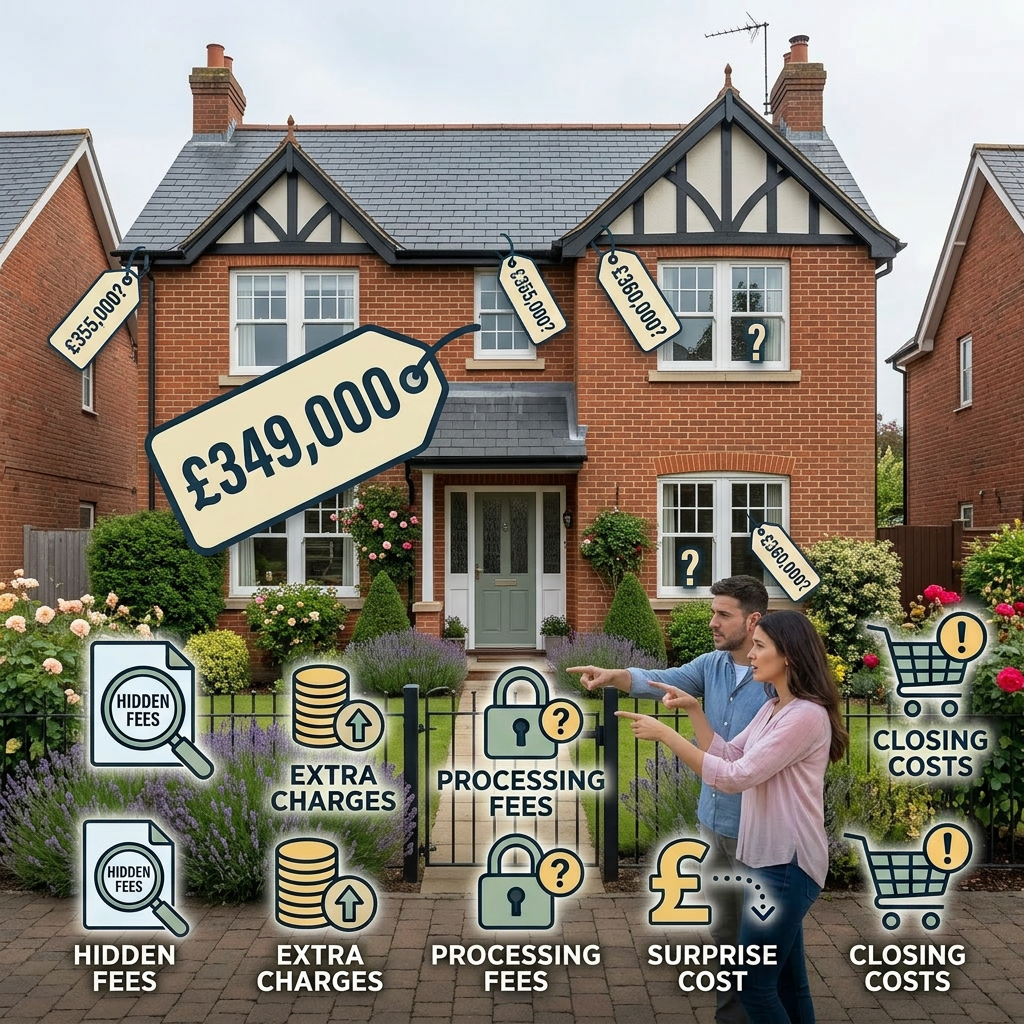
When homeowners compare moving house with renovating, the focus usually lands on the obvious numbers:
- The asking price of the new property,
- The estimated renovation budget, or;
- The size difference between the two homes.
What is often underestimated are the hidden costs of moving; the expenses that quietly accumulate throughout the process and can dramatically change the financial equation.
In 2026, with higher borrowing costs, elevated stamp duty thresholds, and buyers demanding more from homes, these hidden expenses are more important than ever.
For readers of Move or Improve, understanding the true cost of relocating is essential before deciding whether moving genuinely offers better value than improving your current property.
Stamp Duty: The Cost That Changes Everything
Stamp Duty Land Tax (SDLT) remains one of the biggest financial barriers to moving in the UK.
For many households, particularly up-sizers in high-value areas, it can amount to tens of thousands of pounds before a single box has been unpacked.
The crucial point is this:
Stamp duty creates no improvement to the property itself.
Unlike renovation spending, which adds space, efficiency, or functionality, SDLT is purely transactional expenditure.
Increasingly, homeowners are realising that the money spent on tax alone could instead fund:
- A loft conversion,
- A kitchen extension,
- A whole-house retrofit, or;
- Significant layout improvements.
Estate Agent and Legal Fees Add Up Quickly
Selling and buying simultaneously creates multiple layers of professional fees.
These typically include:
- Estate agent commissions,
- Conveyancing costs,
- Mortgage arrangement fees,
- Surveys,
- Valuations,
- Broker charges, and;
- Removal companies.
Individually, they may seem manageable. Combined, they often represent a significant additional burden on top of the purchase itself.
The “Immediate Works” Nobody Budgets For
Very few buyers move into a house and leave it untouched.
In reality, most new homes require:
- Redecorating,
- Flooring replacement,
- Lighting upgrades,
- Boiler servicing,
- Storage improvements, or;
- Layout adjustments.
Even relatively modern properties often need substantial spending before they truly feel like home.
This creates a hidden second renovation phase after moving, one many homeowners fail to anticipate.
Higher Mortgage Costs Can Reshape the Equation
Mortgage affordability continues to influence the 2026 market heavily.
Trading up to a larger property may not simply involve a higher purchase price, it may also mean:
- Higher monthly repayments,
- Reduced financial flexibility, and;
- Greater exposure to future interest-rate shifts.
In many cases, homeowners discover that borrowing to renovate their existing property produces a more manageable long-term financial position.
The Emotional and Lifestyle Costs
Not all hidden costs are financial.
Moving also carries:
- Disruption to routines,
- Stress from chains and delays,
- School changes,
- Commuting adjustments, and;
- Emotional strain from leaving familiar communities.
For families especially, these softer costs can be substantial.
Renovation brings its own disruption, of course—but many homeowners prefer temporary construction stress over permanently leaving a location they love.
Buying Someone Else’s Problems
One of the most overlooked realities of moving is this:
You are exchanging known issues for unknown ones.
A newly purchased property may reveal:
- Damp problems,
- Poor insulation,
- Hidden maintenance issues,
- Awkward neighbour relationships, or;
- Expensive future repairs.
At least with your existing house, you understand its weaknesses—and its potential.
Why Renovation Is Becoming More Attractive
In 2026, many homeowners are redirecting moving costs into improvement projects instead.
Rather than spending heavily on:
- Tax,
- Fees, and;
- Relocation logistics.
They are investing in:
- Extensions,
- Loft conversions,
- Wellness spaces,
- Home offices,
- Energy retrofits, and;
- Garden studios.
Architecturally, this often delivers better long-term value, particularly in locations where buying larger homes has become prohibitively expensive.
The Sustainability Factor
Moving house also carries environmental costs rarely discussed.
Relocation frequently triggers:
- New furniture purchases,
- Replacement kitchens,
- Refurbishment waste, and;
- Additional construction work.
Meanwhile, upgrading an existing property can preserve embodied carbon while
improving energy performance.
For environmentally conscious homeowners, this is becoming an increasingly important consideration.
When Moving Still Makes Sense
Despite these hidden costs, moving can still be the right decision.
Relocation may remain preferable when:
- The site severely limits expansion,
- The area no longer suits your lifestyle,
- Major structural issues exist, or;
- Accessibility needs cannot realistically be accommodated.
The key is understanding the full picture before committing.
Final Thoughts
The real cost of moving house in 2026 extends far beyond the asking price of the next property.
Stamp duty, professional fees, mortgage pressures, emotional disruption, hidden repairs, and immediate upgrade costs can significantly alter the financial logic of relocation.
For many households, investing that same money into carefully planned architectural improvements may deliver a home better suited to modern life, without sacrificing location, community, or long-term financial flexibility.
Before deciding to move, it is worth asking one critical question:
Could the money spent on moving transform the house you already own instead?
Discover more from Move or Improve
Subscribe to get the latest posts sent to your email.
 Move or Improve
Leave a comment