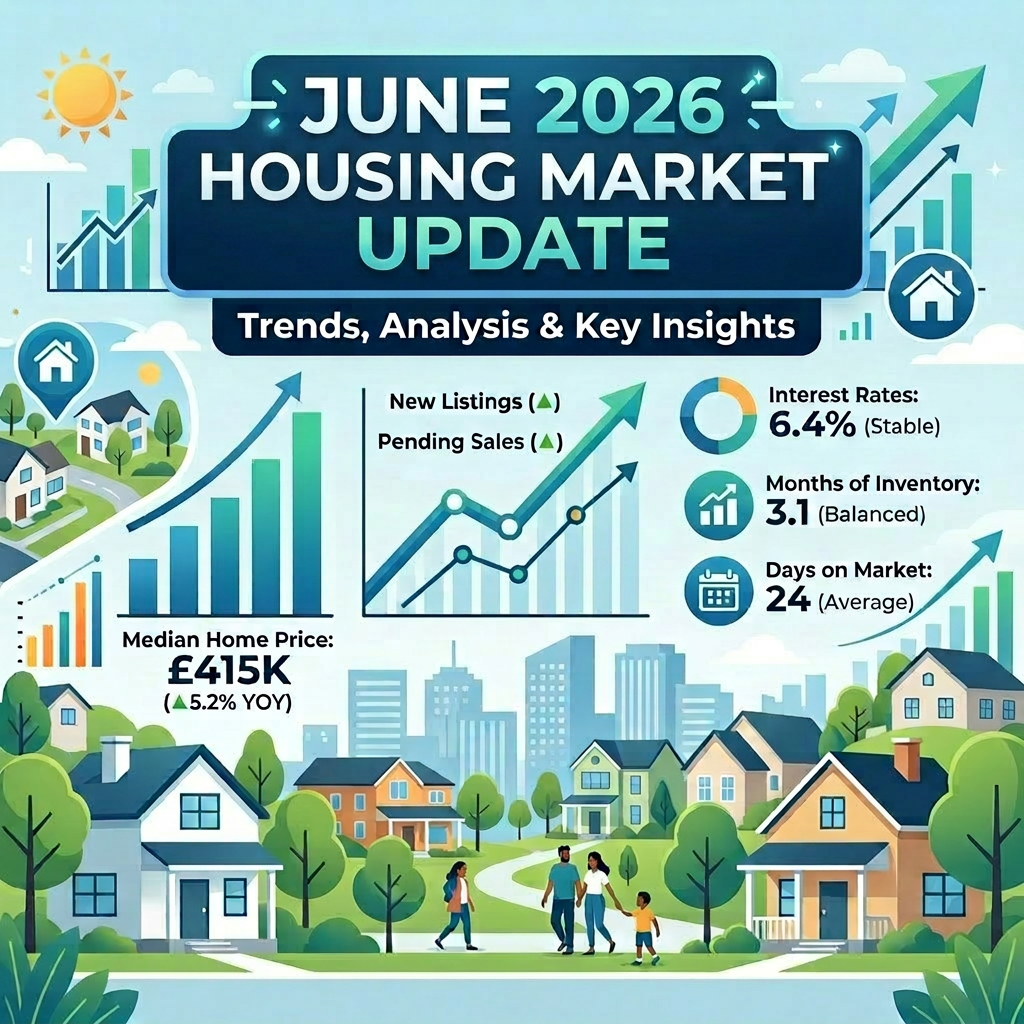
As we reach the halfway point of 2026, the UK housing market remains remarkably resilient despite ongoing affordability pressures and economic uncertainty.
While headlines continue to focus on house prices and mortgage rates, a more significant trend is emerging beneath the surface: buyers are becoming increasingly selective about the type of home they are willing to purchase.
The market is no longer simply rewarding location and size. Increasingly, it is rewarding homes that are energy-efficient, adaptable, well-designed, and ready for modern living.
For homeowners considering whether to move or improve, this shift could have a major impact on future property values and lifestyle decisions.
Essential Insights for Buyers & Investors
The June market can best be described as stable, selective, and increasingly quality-driven.
Properties that offer strong energy performance, flexible layouts, home-working space, and modern interiors continue to attract healthy demand.
By contrast, homes requiring significant upgrades are often taking longer to sell and attracting more price negotiations.
The result is a market where design quality and performance matter more than they have for many years.
UK Market Snapshot
Current market conditions suggest:
- House prices remain broadly stable across much of the UK.
- Family homes continue to outperform smaller properties in many locations.
- Demand remains strongest in areas offering good schools, transport links, and access to green space.
- Buyers are taking longer to make decisions but remain active.
- Energy-efficient homes are increasingly commanding a premium.
The market remains active, but buyers are becoming far more analytical before committing.
Key Trends Shaping the UK Housing Market
The Rise of the Future-Ready Home
One of the strongest trends in 2026 is demand for homes that require little immediate investment.
Buyers increasingly favour properties that already offer:
- Good EPC ratings
- Modern heating systems
- Home office space
- Flexible layouts
- Strong natural light
- Good storage
- Low maintenance requirements
Many purchasers simply do not want to undertake major projects immediately after moving.
Renovation Is Becoming More Strategic
Homeowners who choose to improve rather than move are becoming more sophisticated.
Instead of purely cosmetic upgrades, many are focusing on:
- Energy-efficiency improvements
- Layout reconfiguration
- Wellness-focused spaces
- Home offices
- Loft conversions
- Garden studios
These improvements not only enhance daily life but often improve long-term value.
The Return of Quality Over Quantity
Buyers are increasingly prioritising:
- Better-designed homes
- Flexible living spaces
- Strong indoor-outdoor connections
- Natural light
- Sustainability
This marks a significant shift away from the simple “bigger is better” mindset.
Market Impacts: What’s Driving Change?
Affordability Pressures Remain
Mortgage affordability continues to influence purchasing decisions, encouraging buyers to think carefully before committing.
This is helping to create a more balanced and rational market.
Rising Awareness of Running Costs
Energy bills remain an important consideration.
Many buyers are calculating not only mortgage repayments but also future operating costs when evaluating properties.
Limited Housing Supply
The long-term shortage of quality housing continues to support values, particularly in desirable locations.
Lifestyle Priorities Have Changed
The way people use their homes has evolved.
Buyers increasingly want homes that support:
- Hybrid working
- Health and wellbeing
- Family flexibility
- Long-term occupancy
These priorities are influencing both buying decisions and renovation strategies.
What This Means for You
For Buyers
Focus on the long-term suitability of a property rather than simply its asking price.
Consider:
- Energy efficiency
- Adaptability
- Future renovation potential
- Running costs
- Location resilience
The cheapest home is not always the best value.
For Sellers
Presentation remains important, but performance increasingly matters too.
Homes that stand out often offer:
- Good natural light
- Modern layouts
- Strong EPC ratings
- Flexible living arrangements
- Well-maintained interiors
Investing in these areas can improve market appeal significantly.
For Movers & Upsizers
Before committing to a move, compare the true cost of relocation, including stamp duty, legal fees, and moving expenses with the cost of improving your existing property.
Many homeowners are finding that a carefully planned renovation delivers the lifestyle improvements they want without sacrificing a location they already love.
Investor Insight: Where Smart Money Is Looking
Investors continue to favour properties that offer opportunities for improvement.
Particular interest remains in:
- Homes with retrofit potential
- Properties that can be reconfigured
- Energy-efficiency upgrades
- Strong rental locations
- Areas benefiting from infrastructure investment
The emphasis remains on adding value through intelligent improvement rather than relying solely on market growth.
Key Takeaways
- The housing market remains stable but highly selective.
- Buyers increasingly favour future-ready homes.
- Energy efficiency continues to grow in importance.
- Design quality now influences value more than many homeowners realise.
- Strategic renovation is becoming a compelling alternative to moving.
Final Thoughts
June 2026 highlights a growing divide in the housing market.
Homes that are adaptable, energy-efficient, and thoughtfully designed are increasingly attracting stronger demand and better value retention. Meanwhile, properties that fail to meet modern expectations may face growing pressure to improve.
For many homeowners, this creates an opportunity.
Rather than asking whether you should move, it may be more useful to ask:
Could the home you already own become the future-ready property buyers are increasingly searching for?
As always, the answer depends on your budget, your location, and the untapped potential within your existing home but in today’s market, improving that potential is often proving to be the smartest investment of all.
Discover more from Move or Improve
Subscribe to get the latest posts sent to your email.


Leave a comment