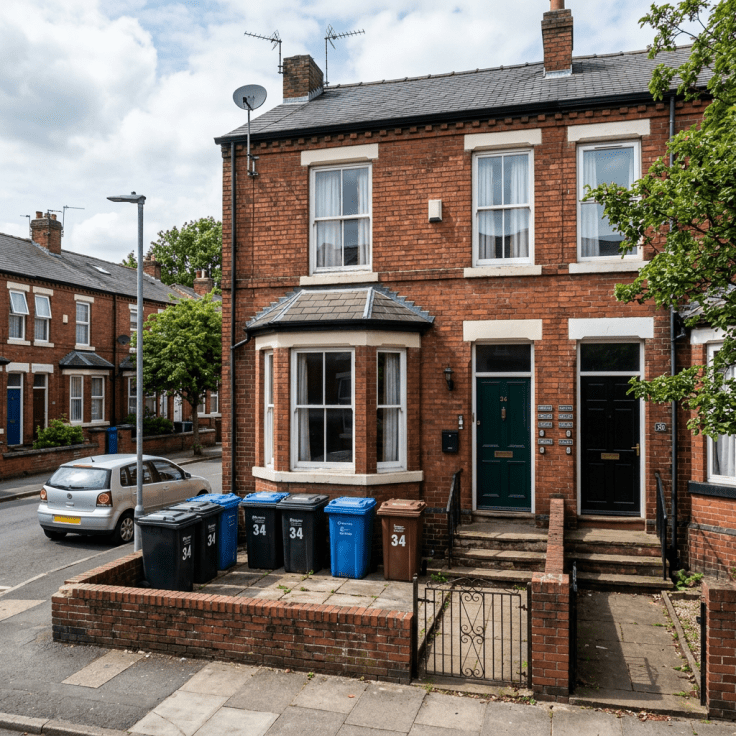
August 2026, begins with a significant change in British politics and a housing market still searching for firmer direction.
Andy Burnham became the new UK prime minister on the 20th July 2026, replacing Keir Starmer and immediately placing housing, regional investment, devolution and the cost of living near the centre of his government’s message.
For the property market, a change of prime minister can influence confidence, policy expectations and investment decisions. However, homeowners should be cautious about assuming that a new administration will produce an immediate rise-or-fall in house prices.
The more immediate influences remain mortgage affordability, household incomes, housing supply, energy costs and buyer confidence.
For readers of Move or Improve, August therefore presents two related questions:
What is happening in the UK housing market now, and could the new government change the outlook?
Essential Insights for Buyers and Investors
The UK housing market enters August in a cautious but broadly stable position.
According to Nationwide, average house prices increased by only 0.1% during July, while annual growth slowed to 1.8%. The average price measured by Nationwide stood at approximately: £277,500.
Zoopla’s July index presented a similarly restrained picture. It reported annual UK price growth of around 1.3%, with agreed sales approximately 9% lower than a year earlier.
This does not suggest a market in collapse. Instead, it reflects:
- Higher mortgage costs.
- Cautious buyer behaviour.
- Economic and political uncertainty.
- Greater choice in some local markets.
- Continued regional variation.
Well-priced and well-designed homes are still selling. The difficulty is greatest for properties that are overpriced, inefficient or in need of substantial work.
UK Housing Market Snapshot
The current market can best be described as resilient but uneven.
Important indicators include:
- House prices are still recording modest annual growth nationally.
- Sales activity has weakened compared with last year.
- Buyers are taking longer to make decisions.
- Mortgage rates remain significantly above the lowest rates available earlier in the decade.
- Regional markets continue to perform differently.
- Energy-efficient, well-presented homes remain more attractive.
- Sellers asking unrealistic prices are increasingly having to reduce them.
The North West has recently recorded stronger growth than several other parts of the country, while London has remained under greater pressure. This widening regional divide may become increasingly relevant under a prime minister whose early agenda strongly emphasises devolution and regional economic growth.
A New Prime Minister: What Has Changed?
Andy Burnham became prime minister on 20 July 2026 and has moved quickly to establish a different political tone.
His early actions have included:
- Launching a new national effort to tackle long-term rough sleeping.
- Providing initial funding intended to secure homes and support for vulnerable people.
- Reappointing Angela Rayner as Housing Secretary.
- Establishing “No. 10 North” in Manchester.
- Announcing further devolution of powers and funding to regional mayors.
- Removing VAT from household electricity bills from October 2026.
- Signalling greater investment in council and social housing.
The government has also indicated that Stamp Duty will not be changed in the forthcoming Autumn Budget.
These are important signals, but the detailed housing strategy, funding arrangements and delivery programme will determine whether the policy direction produces meaningful change.
How Could the New Prime Minister Affect the Housing Market?
1. Greater Regional Investment Could Support Northern Markets
Burnham’s emphasis on moving power and investment away from Westminster could benefit regional cities and surrounding areas.
If devolution leads to:
- Better transport
- New infrastructure
- Local regeneration
- Greater employment growth
- More control over housing delivery,
then selected regional property markets could experience stronger demand over the medium and long term.
54
This will not benefit every northern town automatically. Investors will still need to assess neighbourhood-level fundamentals, including employment, rental demand, transport access and the quality of the local housing stock.
2. More Social and Council Housing Could Improve Supply
The new government has signalled stronger support for council and social housebuilding.
In the long term, additional supply could:
- Reduce pressure on temporary accommodation
- Improve housing security
- support regeneration
- Create construction employment
- Reduce some of the extreme pressure in the prir, infrastructure and delivery resources will all matter.
The effect on mainstream house prices is therefore unlikely to be immediate.
3. Devolution Could Change Planning and Housing Delivery
Giving regional mayors greater financial and decision-making powers could speed up regeneration and housing programmes in some areas.
For homeowners and developers, a more locally controlled system could potentially create:
- Clearer regional development priorities
- Faster decisions on strategic sites
- Better coordination between housing and transport
- More targeted retrofit programmes
- Increased investment around town centres and transport hubs
There is also a risk of greater inconsistency between regions if local authorities do not have sufficient staff, expertise or resources to use the new powers effectively.
4. Lower Electricity Bills May Help Household Affordability
The government has announced that VAT on household electricity bills will be removed from 1 October 2026.
This will not transform mortgage affordability on its own, but it could provide some relief to household budgets, particularly during winter.
That may marginally improve consumer confidence and help some households manage housing costs. It may also strengthen interest in electric heating, heat pumps and other low-carbon home technologies, although the wider cost of installation remains a major consideration.
5. No Immediate Stamp Duty Change
The government has indicated that Stamp Duty changes are not planned for the Autumn Budget. For buyers and upsizers, this means one of the largest costs of moving is likely to remain in place.
This may continue to encourage homeowners to compare the cost of moving with the cost of:
- Extending
- Converting a loft
- Reconfiguring the layout
- Improving energy efficiency
- Creating a garden room or home office
For many households, the tax and professional costs associated with moving can still finance a meaningful improvement to the home they already own.
Interest Rates Remain the Immediate Market Driver
Political change attracts attention, but mortgage rates remain more important to most buyers.
The Bank of England held Bank Rate at 3.75% at its July meeting. Although inflation had fallen to 2.6%, volatile energy costs and international uncertainty continued to create risks.
Average fixed mortgage pricing has eased slightly from recent peaks, but it remains high enough to restrict borrowing capacity.
This means the housing market may continue to experience:
- Modest price growth
- Careful affordability assessments
- Greater negotiation
- Longer selling periods
- Stronger demand for correctly priced homes
A new government may influence the long-term direction of housing policy, but interest rates will continue to shape what buyers can afford today.
Key Trends Shaping the August Market
Buyers Are More Price-Sensitive
Purchasers are no longer assuming that every property will increase rapidly in value.
They are examining:
- Comparable sale prices
- Mortgage repayments
- EPC ratings
- Future maintenance
- Renovation costs
- Local supply
This is putting pressure on sellers who launch above realistic market value.
Good Homes Still Attract Competition
Homes that are realistically priced and offer strong layouts, natural light, energy efficiency and desirable locations can still generate considerable interest.
The market is selective, not inactive.
Regional Performance Is Diverging
The national average increasingly conceals major local differences.
Some northern and regional markets are recording stronger growth, while London and parts of southern England face greater affordability constraints.
The new government’s regional agenda could reinforce this trend if investment reaches the places where infrastructure and employment growth can support housing demand.
Renovation Remains an Alternative to Moving
With Stamp Duty remaining unchanged and mortgage costs still elevated, many homeowners are choosing to improve rather than move.
Popular priorities include:
- Energy retrofit.
- Loft conversions.
- Flexible home-working space.
- Kitchen and garden connections.
- Additional bathrooms.
- Accessibility improvements.
- Better storage and daylight.
A carefully planned renovation may still provide better value than trading up, especially where homeowners already live in a strong location.
What This Means for You
For Buyers
The current market offers more time and, in some cases, greater negotiating power.
Before making an offer:
- Review recent comparable sales.
- Examine the EPC and likely upgrade costs.
- Obtain an appropriate building survey.
- Assess the cost of immediate repairs.
- Understand local planning restrictions.
- Avoid paying a premium for cosmetic presentation alone.
Homes requiring improvement may offer opportunities, but only where the purchase price reflects the cost and risk of the work.
For Sellers
Realistic pricing is crucial.
Buyers are prepared to pay for quality, but they are less willing to ignore:
- Poor energy performance
- Outdated services
- Obvious maintenance problems
- Awkward layouts
- Unrealistic asking prices
Minor improvements to presentation, lighting, maintenance and energy efficiency may support a sale, but expensive renovation immediately before marketing should be assessed carefully.
For Movers and Upsizers
Calculate the full cost of moving before deciding.
Include:
- Stamp Duty
- Estate agency fees
- Legal expenses
- Surveys
- Mortgage costs
- Removals
- Repairs and decorating after purchase
Then compare this with the full cost of adapting your current home.
The financial decision should be based on what each option delivers, not simply the initial headline cost.
For Homeowners Considering Renovation
The new government’s emphasis on devolution, housing delivery and regional retrofit could eventually create new opportunities, although the detail is not yet clear.
Do not delay a viable project solely in anticipation of future grants or policy changes that have not been confirmed, instead:
- Test whether permitted development applies.
- commission a feasibility study.
- Establish a realistic budget.
- Investigate energy improvements.
- Allow for planning, surveys, VAT and contingency.
- Compare the likely end value with the local ceiling price.
Investor Insight: Where Smart Money May Be Looking
The government’s regional agenda may draw further attention to northern cities, mayoral regions and regeneration corridors.
However, investors should avoid buying simply because an area has been described as “up-and-coming.”
The strongest opportunities are likely to combine:
- Affordable entry prices
- Established rental demand
- Employment and population growth
- Transport investment
- Clear refurbishment potential
- Improving neighbourhood fundamentals
- A viable exit through sale or refinance
Properties with poor energy performance may also offer value-add opportunities, provided the cost of reaching an acceptable standard is properly assessed.
Potential Upsides for the Housing Market
The positive possibilities include:
- Stronger investment outside London
- More social and council housing
- Improved local infrastructure
- Better coordination between housing and transport
- Greater focus on retrofit
- Modest relief to household energy costs
- Improved confidence if the government provides a clear long-term plan
Risks and Uncertainties
The principal risks include:
- Policy announcements without sufficient funding
- Delays in planning and construction
- Continued high mortgage rates
- Energy-price inflation
- Weak economic growth
- Skills shortages in construction
- Regional authorities lacking delivery capacity
- Investors overreacting to political promises
The market will respond more strongly to delivery than to rhetoric.
Key Takeaways
- Andy Burnham became prime minister on the 20th July 2026.
- Housing, rough sleeping, devolution and regional growth are early government priorities.
- House prices remain broadly resilient, but growth is modest.
- Sales activity has weakened and buyers are increasingly cautious.
- Bank Rate remains at 3.75%, making affordability the main short-term constraint.
- Stamp Duty is not currently expected to change in the Autumn Budget.
- Regional investment could support selected northern markets over time.
- The immediate effect of the new government on house prices is likely to be limited.
- Homeowners should continue comparing the full cost of moving with the cost of improving.
Final Thoughts
August 2026 begins with both political change and economic uncertainty.
The arrival of a new prime minister may eventually reshape housing delivery, regional investment, social housing and retrofit policy. Andy Burnham’s early emphasis on devolution and housing suggests that property will remain high on the political agenda.
However, homeowners should not expect an overnight transformation.
For the immediate future, house prices will remain more heavily influenced by mortgage affordability, local supply, household confidence and the quality of individual properties.
For buyers, this is a market in which careful negotiation and proper due diligence matter.
For sellers, realistic pricing is essential.
For investors, regional growth opportunities require detailed local analysis rather than speculation.
And for homeowners deciding whether to move or improve, the central question remains unchanged:
Will the cost of relocating produce a better home than investing in the one you already own?
In many cases, particularly while Stamp Duty and mortgage costs remain significant, a well-designed and carefully costed renovation may still offer the strongest answer.
Check out our articles for more detail and infraction and if you need any further help email us enquiries@moveorimprove.uk
Discover more from Move or Improve
Subscribe to get the latest posts sent to your email.


Leave a Reply