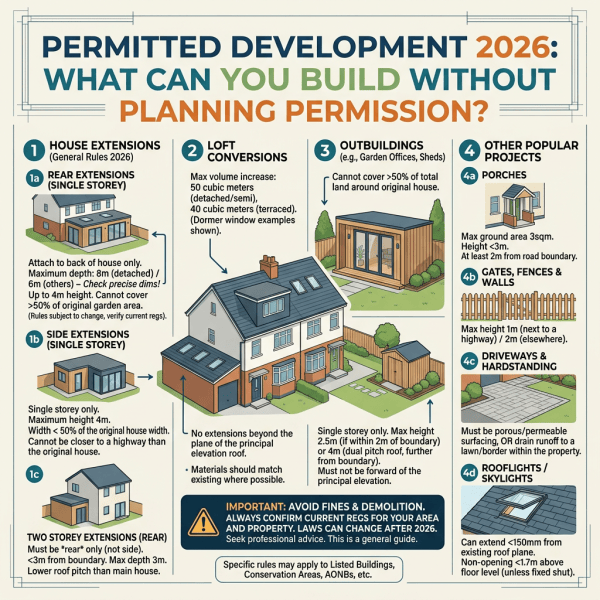
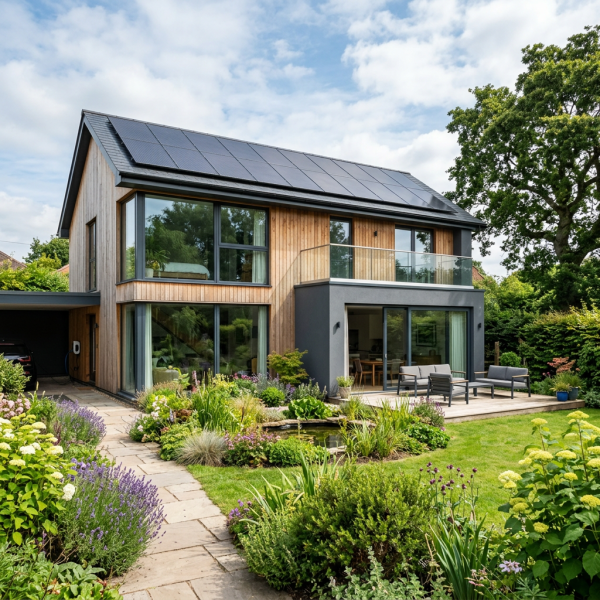
A glass-walled extension enhances a country house's garden. Homeowners often question if planning permission is needed for extensions, and many can benefit from England's permitted development (PD) rights, which allow certain improvements without full applications. Understanding PD is crucial, as it simplifies the process while still adhering to regulations.
EPC Ratings in 2026: Could Energy Efficiency Affect What Your Home Is Worth?
The increasing focus on Energy Performance Certificate (EPC) ratings reflects buyers' awareness of long-term running costs. Factors like energy prices and mortgage affordability drive this interest. Homes with efficient features are gaining importance, while strategies for energy upgrades, including careful retrofitting, can enhance property value and marketability in the evolving real estate landscape.
London Falling, North West Rising? Why There Is No Single UK Housing Market
The UK housing market shows stark regional differences, with the North West experiencing a 4.7% price increase while London faces a 2.5% decline. National averages mask local variations influenced by factors like employment and amenities. Homeowners and investors should focus on specific local data for informed decisions, leveraging regional opportunities.
September 2026 UK Housing Market Update: Buyers Return, Price Growth Slows and Inflation Complicates the Outlook
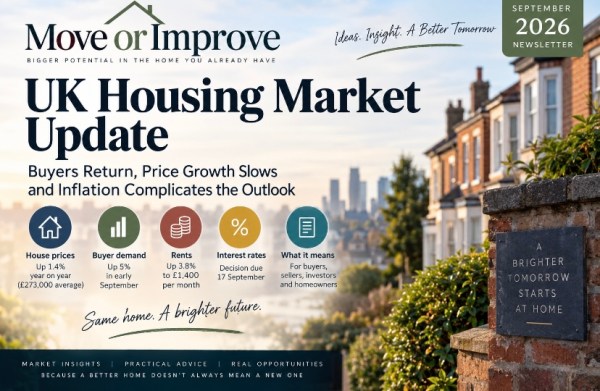
A leafy residential street showcases historic homes, new apartments, and several properties for sale or rent. September has brought a fascinating mixture of good and bad news for the UK housing market. House-price growth remains positive but subdued. Buyers have returned to the market surprisingly strongly after the summer holidays, rents continue to rise, and... Continue Reading →
August 2026 Housing Market Update: What a New Prime Minister Could Mean for Homes, Prices and Investment
In August 2026, the UK housing market remains cautious yet stable amid significant political changes following Andy Burnham's appointment as Prime Minister. Housing policies focusing on regional investment and social housing emerged, but immediate market impacts are limited. Buyers face high mortgage costs and a selective market, emphasizing the importance of careful negotiations and realistic pricing.
Transforming Homes: The Future of Residential Architecture
Residential architecture is evolving rapidly, emphasizing wellness, sustainability, and flexibility. Key priorities include daylight, air quality, and acoustic comfort. Homes are designed for multifunctionality, integrating technology subtly. The focus is on adaptability and long-term living, making understanding these changes crucial for homeowners considering moving or improving their properties.
Why Home Design Quality Outweighs Size in 2026
Modern homebuyers prioritize experience over size, valuing design quality, natural light, flexible layouts, and energy efficiency. A well-designed smaller home can outperform a large, poorly designed house. Architects enhance usability through improved circulation, integrated storage, and garden connections, leading to greater emphasis on how a home feels by 2026.
Move vs. Improve: Calculate Your Best Home Investment
To decide between renovation or relocation financially, calculate total moving costs (including stamp duty and legal fees) and full renovation costs (including construction and professional fees). Compare which option provides a better home, supports long-term living, and creates more value. The least expensive upfront may not be the best investment.
Why Energy Performance is Key in the UK Housing Market
In 2026, energy performance significantly influences the UK housing market. Buyers prioritize homes that are economical, warm, and environmentally responsible. Strong EPC ratings enhance buyer appeal and mortgage options, while inefficient homes face increased scrutiny. Sustainability is becoming essential for property value as buyers seek predictable energy costs.