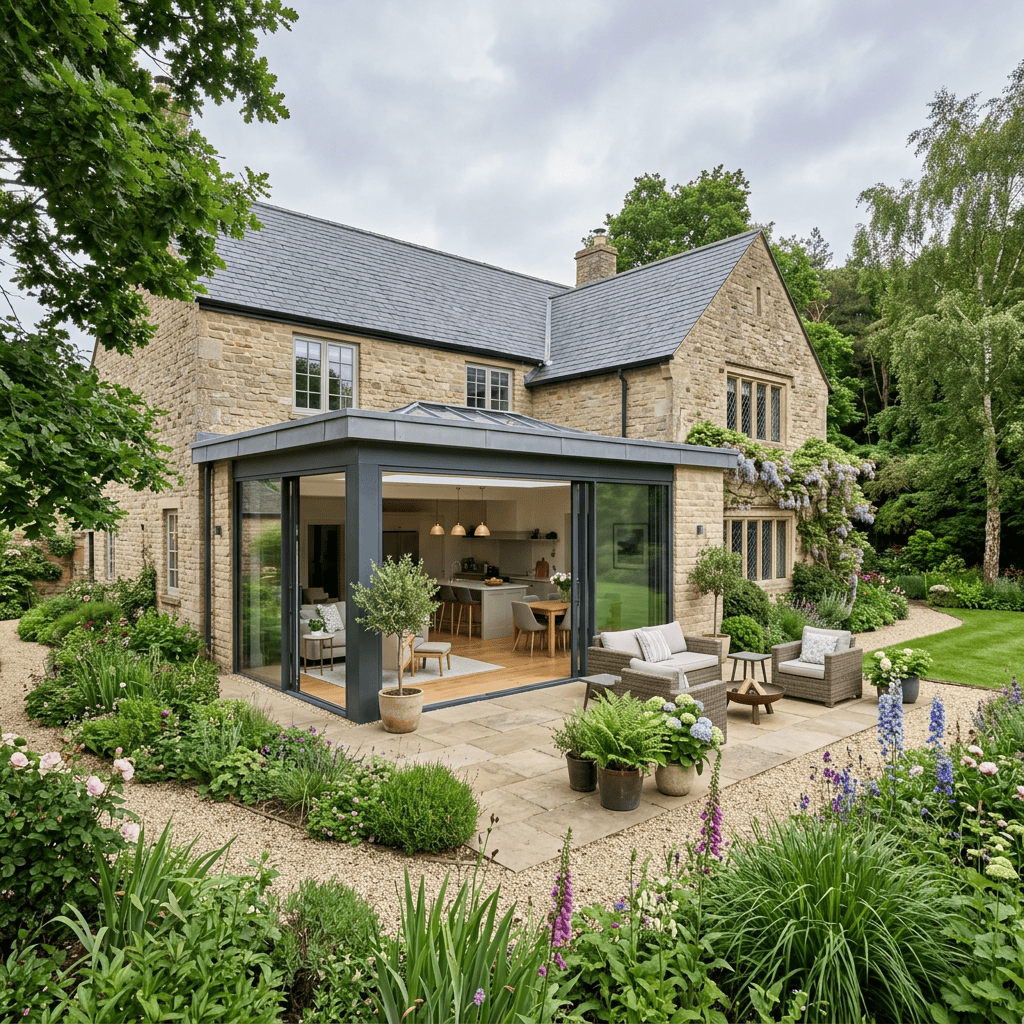
One of the first questions homeowners ask when discussing an extension is:
“Do I need planning permission?”
And very often, the answer may be:
Not necessarily.
England’s permitted development rights allow many homeowners to undertake certain extensions and alterations without making a conventional full planning application.
For anyone considering whether to move or improve, understanding permitted development can fundamentally change what is possible.
What Is Permitted Development?
Permitted development, commonly known as PD, grants automatic planning permission for certain forms of development provided strict limitations and conditions are met.
Householder PD rights can cover works including certain:
- Rear extensions.
- Side extensions.
- Loft conversions.
- Roof alterations.
- Outbuildings.
The specific rules depend on the project and property.
For example, Class A rights cover certain enlargements, improvements and alterations to houses, subject to conditions including site coverage restrictions.
Why PD Can Make Improving More Attractive
A conventional planning application introduces:
- Additional time.
- Greater uncertainty.
- Consultation.
- Potential objections.
- Risk of refusal.
Permitted development can therefore make some projects considerably more straightforward.
This can be particularly useful when homeowners simply need:
- A larger kitchen.
- Additional bedroom.
- Home office.
- Better garden connection.
Permitted Development Does Not Mean ‘No Rules’
This is crucial.
PD is still development law.
Restrictions can relate to:
- Height.
- Depth.
- Position.
- Materials.
- Roof form.
- Boundaries.
- Previous extensions.
And rights may be restricted for certain properties or locations.
Flats generally do not benefit from the same householder PD rights, while listed buildings, conservation areas and Article 4 Directions can introduce additional limitations.
Should You Get a Lawful Development Certificate?
In many cases, yes.
Even where planning permission is not required, obtaining a Lawful Development Certificate can provide formal confirmation that the proposed works are lawful.
That documentation can become particularly useful when:
- Selling.
- Remortgaging.
- Dealing with solicitors.
- Demonstrating compliance later.
What About Building Regulations?
Planning and Building Regulations are completely different systems.
A project can be permitted development and still require Building Regulations approval.
Building Regulations address issues such as:
- Structure.
- Fire safety.
- Insulation.
- Drainage.
- Ventilation.
- Electrical safety.
Never assume that avoiding a planning application means avoiding other approvals.
Could PD Save You From Moving?
Potentially.
If you believe your house needs another bedroom or a larger kitchen, establish what PD allows before putting the property on the market.
A relatively straightforward extension or loft conversion could solve the problem that was making you consider moving.
Final Thoughts
Permitted development is one of the most useful tools available to homeowners — but it needs to be understood properly.
Before assuming your house cannot be expanded, have its planning potential assessed.
You may have considerably more freedom than you realise.
Discover more from Move or Improve
Subscribe to get the latest posts sent to your email.


Leave a Reply