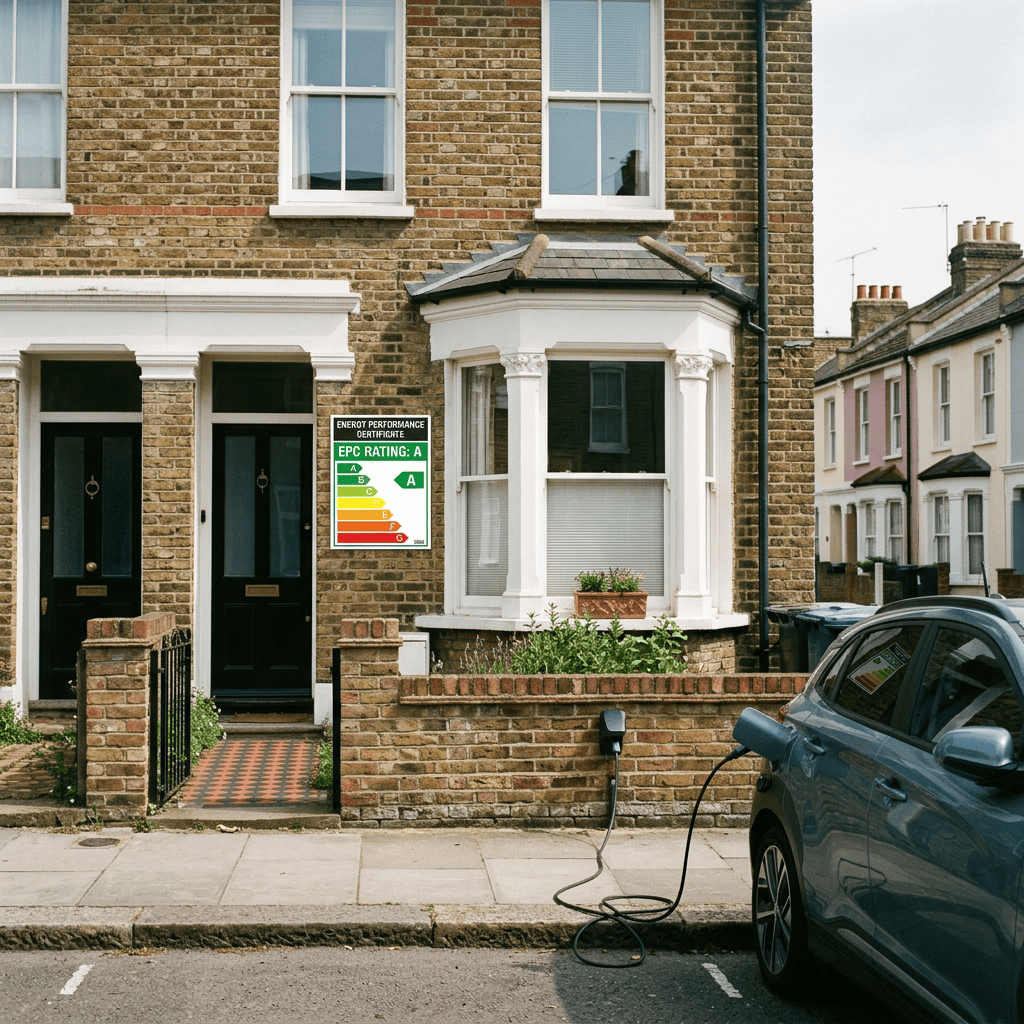
For years, an Energy Performance Certificate was something many buyers barely examined.
That is changing.
Energy prices, mortgage affordability and awareness of retrofit costs mean buyers are paying far greater attention to how much a house will cost to run.
As a result, EPC ratings and energy efficiency are increasingly becoming part of the property-value conversation.
Why Buyers Care
Two houses may have identical asking prices but very different running costs.
One might offer:
- Good insulation.
- Modern glazing.
- Efficient heating.
- Solar generation.
Another might require tens of thousands of pounds of upgrading.
Increasingly, buyers are calculating these future costs before making offers.
The Fabric-First Approach
Architects generally recommend addressing the building fabric before simply installing technology.
That can mean:
- Loft insulation.
- Wall insulation.
- Floor insulation.
- Draught reduction.
- Improved glazing.
- Airtightness measures.
Once heat demand is reduced, technologies such as heat pumps can work far more effectively.
Heat Pumps Are Becoming Easier to Install
Planning rules for air-source heat pumps in England were relaxed in 2025.
Among the changes, heat pumps can now in certain circumstances be installed within one metre of a boundary under permitted development, and the allowable unit size for houses increased.
The government is considering further changes during 2026.
That could make low-carbon retrofit practical for a much larger number of homes.
Does a Poor EPC Mean You Shouldn’t Buy?
Not necessarily.
An EPC E house in a fantastic location with good structure and clear retrofit potential might actually offer an opportunity.
The questions are:
Why is it EPC E?
and
How much will it genuinely cost to improve?
A relatively straightforward insulation programme is very different from a house requiring extensive structural, heating and fabric work.
Beware Poorly Planned Retrofit
Older buildings need careful treatment.
Simply adding insulation without considering ventilation and moisture movement can create:
- Condensation.
- Mould.
- Timber deterioration.
- Poor indoor air quality.
A whole-house strategy is therefore preferable to installing isolated improvements.
Energy Efficiency and the Move-or-Improve Decision
Energy performance can also strengthen the argument for staying put.
A comprehensive renovation might combine:
- Better layout.
- Additional space.
- Improved insulation.
- New heating.
- Solar PV.
- Better ventilation.
Instead of buying another inefficient property, you create a house whose performance you actually understand.
Final Thoughts
An EPC does not tell you everything about a house.
But in 2026, ignoring energy performance is increasingly difficult.
For buyers, it can reveal future expenditure.
For sellers, efficiency can improve marketability.
And for homeowners considering renovation, energy upgrades can turn an uncomfortable older property into a genuinely future-ready home.
Discover more from Move or Improve
Subscribe to get the latest posts sent to your email.


Leave a comment